
Carbon black
Carbon black is a key material used in many industries, from rubber to electronics. But what makes it so essential? This essay will delve into its unique properties and explore the various ways it contributes to different products and industries.
What is carbon black?
Carbon-black is a refined form of elemental carbon produced through the incomplete combustion or thermal decomposition of hydrocarbons. It appears as a fine black powder or pellet and is primarily used as a coloring agent and reinforcing additive in various industries.
The properties of carbon black color have been enhanced over time to improve aspects like tint strength, jets, blue undertone, and conductivity. With global production reaching around 18 billion pounds annually, the majority is used in rubber applications, while a smaller portion is used in pigments and other specialized uses.
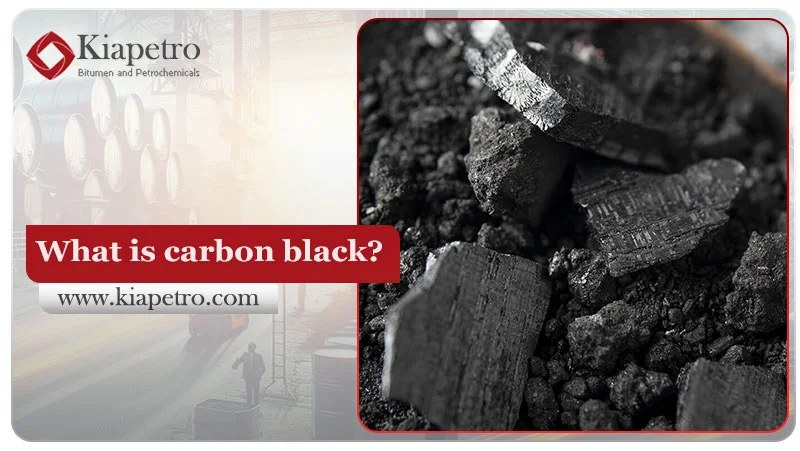
Understanding the different production methods and key factors—such as surface area, particle size, structure, and conductivity—can help in selecting the right grade of carbon-black for specific formulations.
How is carbon-black produced?
Carbon black manufacturers make this product using different methods. This substance can also be made by recovering tires.
| Production Method | Key Features | Applications |
| Furnace Black Process | Uses aromatic hydrocarbon oil, high yield, and controlled particle size. Ideal for mass production. | Mass production, high-performance materials. |
| Thermal Black Process | Uses methane gas, produces large particles with low structure, and is the purest industrial carbon-black. | High purity applications, industrial uses. |
| Channel Process | Uses partially combusted fuel on steel channels, which is a high cost that is declining due to environmental concerns. | Less common due to environmental impact and cost. |
| Acetylene Black Process | Uses acetylene gas, produces crystalline carbon-black, and is highly structured. | Conductive applications (e.g., batteries, electronics). |
| Lampblack Process | The oldest method uses mineral/vegetable oils. | Traditional uses less efficient. |
Carbon black formula and properties
Carbon black is more than 99% pure carbon, with trace amounts of oxygen, hydrogen, and nitrogen. Available in powder or pellet form, its particles range from 10nm to 100nm in size and form chain-like aggregates. Carbon-black grades vary in properties like particle size, structure, surface chemistry, and porosity.
Key Properties of carbon-black
- Particle Size: Smaller particles increase surface area, leading to better reinforcement, abrasion resistance, and tensile strength, but require more energy for dispersion.
- Structure/Aggregate Size: The degree of branching in aggregates impacts properties like modulus, hardness, electrical conductivity, and viscosity.
- Porosity: Affects surface area measurements and increases compound modulus and conductivity.
- Surface Chemistry: Carbon-black’s surface improves interaction with elastomers, enhancing abrasion resistance, tensile strength, and hysteresis without additional agents.
Analysis Methods
Carbon-black is an essential component in everyday products, including rubber, plastics, coatings, tires, and inks. Each application requires specific carbon black properties, influencing the final product’s performance. These qualities are determined by production processes and industry standards (ASTM for rubber grades).
| Property | Test Method |
| BET Surface Area | ASTM D6556 |
| Oil Absorption Number | ASTM D2414 |
| Pellets Hardness | ASTM D5230 |
| pH | ASTM D1512 |
| Ash Content | ASTM D1506 |
Carbon-black grades
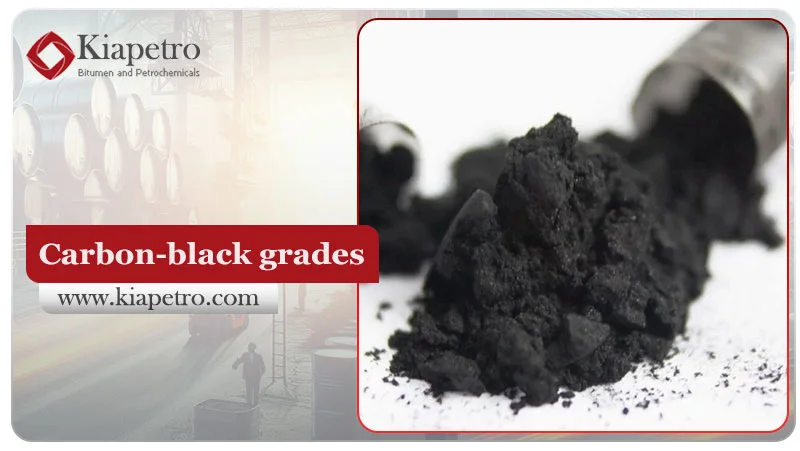
Carbon-black is produced by heating hydrocarbons like coal tar, petroleum oils, or gas in controlled furnaces at temperatures of 1,420°C to 1,980°C, forming fine carbon particles.
The oil furnace process accounts for 95% of global production, with thermal black, lamp black, and acetylene black processes making up the rest. Over 90% of vCB is used in rubber products, especially tires, while 10% is used in UV absorption, as a conductor in plastics, inks, coatings, or as a pigment.
Various Grades of carbon-black:
| Grade | Particle Size (nm) | Surface Area (m²/g) | Reinforcement | Applications |
| N110 | 15-18 | 124-130 | High | Tire products requiring high abrasion resistance |
| N134 | 20-25 | 145 | High | Premium tread for passenger, bus, and truck tires |
| N220 | 20-25 | 112-115 | High | Tread in truck and passenger tires |
| N234 | 24-33 | 125 | High | Truck tread and other applications |
| N330 | 28-36 | 76-80 | Medium-High | Various tire compounds |
| N339 | 28-36 | 95 | Medium-High | Passenger tire treads, conveyor belts, motor mounts |
| N550 | 39-55 | 39-41 | Medium-High | Tire inner liners, rubber goods, extruded products |
| N660 | 56-70 | 34-36 | Medium | Tire inner liners, sealing rings, rubber molding |
| N770 | 71-96 | 31-32 | Semi-Reinforcing | Inner liners for tires and rubber goods |
| N880 | 180-200 | 17-20 | Low | Non-tire rubber and plastic products |
| N990 | 250-350 | 7-9 | Low | Tire inner liners, rubber, plastic products (footwear, belts, hoses) |
Carbon black uses
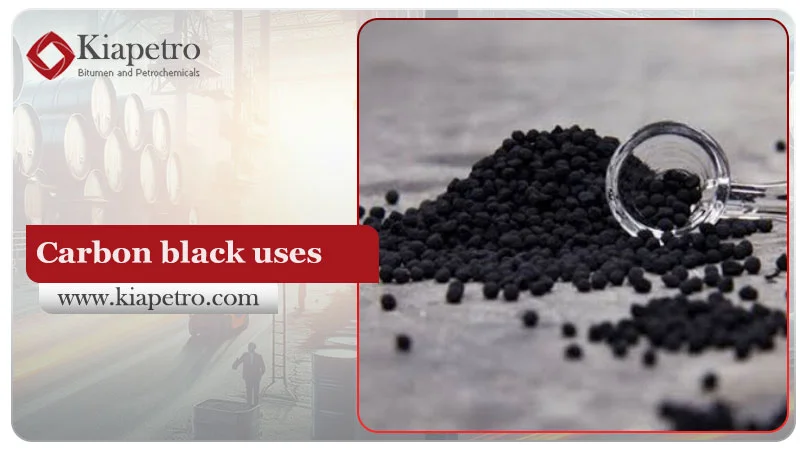
Carbon-black is a versatile material used across various industries, enhancing the performance, durability, and efficiency of many essential products. From automotive and industrial applications to everyday consumer goods, it plays a crucial role in strengthening materials, improving conductivity, and offering UV protection.
Common carbon black application:
- Tires: Enhances processing, strength, and durability, boosting tire longevity, fuel efficiency, and safety.
- Plastics: Provides color, UV protection, and conductivity, making it essential for shielding power cables and preventing electrostatic discharge.
- Batteries: Improves electrochemical conductivity and charging efficiency in lead-acid, stop-start, and hybrid batteries.
- Pipes: Shields pipes from mechanical wear and UV damage, extending their lifespan.
- Wire & Cable: Enhances durability and efficiency by ensuring smooth, conductive insulation, shielding conductors, and providing UV resistance.
- High-Performance Coatings: Offers deep black pigmentation, UV protection, and conductivity for coatings.
- Agricultural Applications: Aids in efficient farming by optimizing water management in irrigation, mulch films, and greenhouse covers while offering UV resistance.
- Toner & Printing Inks: Enhances pigmentation, color depth, and undertone for various ink formulations.
- Food-Grade Applications: Meets strict purity standards for use in regulated industrial and consumer plastic products.
- Rubber Goods: Enhances mechanical strength, vibration resistance, and conductivity in hoses, belts, and gaskets.
- Automotive Interior Components: Low PAH carbon-black ensures superior UV protection for skin-contact elements like steering wheels, gear shifts, and armrests.
Carbon-black security
VMware Carbon-Black offers advanced endpoint security solutions designed to detect, prevent, and respond to a wide range of cyber threats. These solutions are built to safeguard critical systems and data by providing continuous monitoring, behavioral analysis, and rapid response capabilities to ensure robust protection across an organization’s network.
- Carbon Black EDR: Offers real-time visibility into endpoint activity for fast detection, investigation, and response. It includes automated threat hunting and scalable security management.
- Carbon Black Software: A suite with next-gen antivirus, EDR, managed detection, and audit/remediation features to secure endpoints and ensure compliance.
- Carbon Black VMware Cloud™: A cloud-based platform that combines system hardening and behavioral prevention, analyzing over 1 trillion security events daily to protect apps, clouds, and devices. Carbon-Black EDR records endpoint activity, offering real-time threat detection and insights into the attack kill chain.
Finding the Right Carbon-Black Grade for Your Application
When choosing carbon black for coatings, it’s important to evaluate key factors like performance, application needs, and cost to ensure the best choice for your project. Consider these factors:
- Tinting Strength: Determines color intensity.
- Jetness: Affects the richness of black color.
- Ease of Use: How easily it blends into the mixture.
- Dispersion Time: Time to evenly mix in the coating.
- Dispersion Loading: Amount needed for desired properties.
- Viscosity: Must match the coating’s consistency.
- Physical Form: Powder or pellets, impacting handling and mixing.
- Price: Balance quality with budget.
- Final Application: Consider food safety, UV protection, and conductivity needs.
Carbon black manufacturers
The global carbon black market is expected to grow steadily in the coming years. Carbon-black, a fine carbon powder used in tires, rubber, plastics, and coatings, offers benefits like UV protection and enhanced thermal conductivity.
Key market players include:
- Cabot Corporation (USA) – Specialty chemicals for multiple industries.
- Thai Carbon-Black (Birla Carbon) (Thailand) – Leading manufacturer and distributor.
- Orion Engineered Carbons S.A. (USA) – Supplier of specialty carbon-black.
- Phillips Carbon-Black Ltd. (India) – Largest carbon-black manufacturer in India.
- Tokai Carbon Co., Ltd. (Japan) – Producer of carbon-black and graphite products.
- Omsk Carbon Group (Russia) – Leading producer globally.
- Jiangxi Black Cat (China) – Manufacturer of specialty carbon-black.
- OCI Company Ltd. (South Korea) – Chemical solutions provider.
- China Synthetic Rubber Corporation (Taiwan) – Global leader in carbon-black manufacturing.
Why choose us?
Kiapetro is a reputable provider of superior carbon-black, ensuring smooth logistics, secure warehousing, and a dependable supply network. Headquartered in Iran, we export high-grade carbon black to nearby countries, catering to diverse industrial needs.
Our products comply with global standards, guaranteeing outstanding quality and reliable performance. With cost-effective pricing, adaptable payment solutions, and a dedication to punctual delivery, we offer a streamlined and efficient procurement process. Reach out to us today for further details and pricing information.
FAQ
- Is carbon-black safe to use?
It is safe, but inhalation may cause respiratory issues.
- Can carbon-black be recycled?
Yes, it is recycled, reused, and reduces waste.
- Can carbon-black be used in food or cosmetics?
It is used as a pigment in food and cosmetics, with regulated safety.
Carbon black is a key material used in many industries, from rubber to electronics. But what makes it so essential? This essay will delve into its unique properties and explore the various ways it contributes to different products and industries.
What is carbon black?
Carbon-black is a refined form of elemental carbon produced through the incomplete combustion or thermal decomposition of hydrocarbons. It appears as a fine black powder or pellet and is primarily used as a coloring agent and reinforcing additive in various industries.
The properties of carbon black color have been enhanced over time to improve aspects like tint strength, jets, blue undertone, and conductivity. With global production reaching around 18 billion pounds annually, the majority is used in rubber applications, while a smaller portion is used in pigments and other specialized uses.
Understanding the different production methods and key factors—such as surface area, particle size, structure, and conductivity—can help in selecting the right grade of carbon-black for specific formulations.
How is carbon-black produced?
Carbon black manufacturers make this product using different methods. This substance can also be made by recovering tires.
| Production Method | Key Features | Applications |
| Furnace Black Process | Uses aromatic hydrocarbon oil, high yield, and controlled particle size. Ideal for mass production. | Mass production, high-performance materials. |
| Thermal Black Process | Uses methane gas, produces large particles with low structure, and is the purest industrial carbon-black. | High purity applications, industrial uses. |
| Channel Process | Uses partially combusted fuel on steel channels, which is a high cost that is declining due to environmental concerns. | Less common due to environmental impact and cost. |
| Acetylene Black Process | Uses acetylene gas, produces crystalline carbon-black, and is highly structured. | Conductive applications (e.g., batteries, electronics). |
| Lampblack Process | The oldest method uses mineral/vegetable oils. | Traditional uses less efficient. |
Carbon black formula and properties
Carbon black is more than 99% pure carbon, with trace amounts of oxygen, hydrogen, and nitrogen. Available in powder or pellet form, its particles range from 10nm to 100nm in size and form chain-like aggregates. Carbon-black grades vary in properties like particle size, structure, surface chemistry, and porosity.
Key Properties of carbon-black
- Particle Size: Smaller particles increase surface area, leading to better reinforcement, abrasion resistance, and tensile strength, but require more energy for dispersion.
- Structure/Aggregate Size: The degree of branching in aggregates impacts properties like modulus, hardness, electrical conductivity, and viscosity.
- Porosity: Affects surface area measurements and increases compound modulus and conductivity.
- Surface Chemistry: Carbon-black's surface improves interaction with elastomers, enhancing abrasion resistance, tensile strength, and hysteresis without additional agents.
Analysis Methods
Carbon-black is an essential component in everyday products, including rubber, plastics, coatings, tires, and inks. Each application requires specific carbon black properties, influencing the final product's performance. These qualities are determined by production processes and industry standards (ASTM for rubber grades).
| Property | Test Method |
| BET Surface Area | ASTM D6556 |
| Oil Absorption Number | ASTM D2414 |
| Pellets Hardness | ASTM D5230 |
| pH | ASTM D1512 |
| Ash Content | ASTM D1506 |
Carbon-black grades
Carbon-black is produced by heating hydrocarbons like coal tar, petroleum oils, or gas in controlled furnaces at temperatures of 1,420°C to 1,980°C, forming fine carbon particles.
The oil furnace process accounts for 95% of global production, with thermal black, lamp black, and acetylene black processes making up the rest. Over 90% of vCB is used in rubber products, especially tires, while 10% is used in UV absorption, as a conductor in plastics, inks, coatings, or as a pigment.
Various Grades of carbon-black:
| Grade | Particle Size (nm) | Surface Area (m²/g) | Reinforcement | Applications |
| N110 | 15-18 | 124-130 | High | Tire products requiring high abrasion resistance |
| N134 | 20-25 | 145 | High | Premium tread for passenger, bus, and truck tires |
| N220 | 20-25 | 112-115 | High | Tread in truck and passenger tires |
| N234 | 24-33 | 125 | High | Truck tread and other applications |
| N330 | 28-36 | 76-80 | Medium-High | Various tire compounds |
| N339 | 28-36 | 95 | Medium-High | Passenger tire treads, conveyor belts, motor mounts |
| N550 | 39-55 | 39-41 | Medium-High | Tire inner liners, rubber goods, extruded products |
| N660 | 56-70 | 34-36 | Medium | Tire inner liners, sealing rings, rubber molding |
| N770 | 71-96 | 31-32 | Semi-Reinforcing | Inner liners for tires and rubber goods |
| N880 | 180-200 | 17-20 | Low | Non-tire rubber and plastic products |
| N990 | 250-350 | 7-9 | Low | Tire inner liners, rubber, plastic products (footwear, belts, hoses) |
Carbon black uses
Carbon-black is a versatile material used across various industries, enhancing the performance, durability, and efficiency of many essential products. From automotive and industrial applications to everyday consumer goods, it plays a crucial role in strengthening materials, improving conductivity, and offering UV protection.
Common carbon black application:
- Tires: Enhances processing, strength, and durability, boosting tire longevity, fuel efficiency, and safety.
- Plastics: Provides color, UV protection, and conductivity, making it essential for shielding power cables and preventing electrostatic discharge.
- Batteries: Improves electrochemical conductivity and charging efficiency in lead-acid, stop-start, and hybrid batteries.
- Pipes: Shields pipes from mechanical wear and UV damage, extending their lifespan.
- Wire & Cable: Enhances durability and efficiency by ensuring smooth, conductive insulation, shielding conductors, and providing UV resistance.
- High-Performance Coatings: Offers deep black pigmentation, UV protection, and conductivity for coatings.
- Agricultural Applications: Aids in efficient farming by optimizing water management in irrigation, mulch films, and greenhouse covers while offering UV resistance.
- Toner & Printing Inks: Enhances pigmentation, color depth, and undertone for various ink formulations.
- Food-Grade Applications: Meets strict purity standards for use in regulated industrial and consumer plastic products.
- Rubber Goods: Enhances mechanical strength, vibration resistance, and conductivity in hoses, belts, and gaskets.
- Automotive Interior Components: Low PAH carbon-black ensures superior UV protection for skin-contact elements like steering wheels, gear shifts, and armrests.
Carbon-black security
VMware Carbon-Black offers advanced endpoint security solutions designed to detect, prevent, and respond to a wide range of cyber threats. These solutions are built to safeguard critical systems and data by providing continuous monitoring, behavioral analysis, and rapid response capabilities to ensure robust protection across an organization's network.
- Carbon Black EDR: Offers real-time visibility into endpoint activity for fast detection, investigation, and response. It includes automated threat hunting and scalable security management.
- Carbon Black Software: A suite with next-gen antivirus, EDR, managed detection, and audit/remediation features to secure endpoints and ensure compliance.
- Carbon Black VMware Cloud™: A cloud-based platform that combines system hardening and behavioral prevention, analyzing over 1 trillion security events daily to protect apps, clouds, and devices. Carbon-Black EDR records endpoint activity, offering real-time threat detection and insights into the attack kill chain.
Finding the Right Carbon-Black Grade for Your Application
When choosing carbon black for coatings, it's important to evaluate key factors like performance, application needs, and cost to ensure the best choice for your project. Consider these factors:
- Tinting Strength: Determines color intensity.
- Jetness: Affects the richness of black color.
- Ease of Use: How easily it blends into the mixture.
- Dispersion Time: Time to evenly mix in the coating.
- Dispersion Loading: Amount needed for desired properties.
- Viscosity: Must match the coating’s consistency.
- Physical Form: Powder or pellets, impacting handling and mixing.
- Price: Balance quality with budget.
- Final Application: Consider food safety, UV protection, and conductivity needs.
Carbon black manufacturers
The global carbon black market is expected to grow steadily in the coming years. Carbon-black, a fine carbon powder used in tires, rubber, plastics, and coatings, offers benefits like UV protection and enhanced thermal conductivity.
Key market players include:
- Cabot Corporation (USA) – Specialty chemicals for multiple industries.
- Thai Carbon-Black (Birla Carbon) (Thailand) – Leading manufacturer and distributor.
- Orion Engineered Carbons S.A. (USA) – Supplier of specialty carbon-black.
- Phillips Carbon-Black Ltd. (India) – Largest carbon-black manufacturer in India.
- Tokai Carbon Co., Ltd. (Japan) – Producer of carbon-black and graphite products.
- Omsk Carbon Group (Russia) – Leading producer globally.
- Jiangxi Black Cat (China) – Manufacturer of specialty carbon-black.
- OCI Company Ltd. (South Korea) – Chemical solutions provider.
- China Synthetic Rubber Corporation (Taiwan) – Global leader in carbon-black manufacturing.
Why choose us?
Kiapetro is a reputable provider of superior carbon-black, ensuring smooth logistics, secure warehousing, and a dependable supply network. Headquartered in Iran, we export high-grade carbon black to nearby countries, catering to diverse industrial needs.
Our products comply with global standards, guaranteeing outstanding quality and reliable performance. With cost-effective pricing, adaptable payment solutions, and a dedication to punctual delivery, we offer a streamlined and efficient procurement process. Reach out to us today for further details and pricing information.
FAQ
- Is carbon-black safe to use?
It is safe, but inhalation may cause respiratory issues.
- Can carbon-black be recycled?
Yes, it is recycled, reused, and reduces waste.
- Can carbon-black be used in food or cosmetics?
It is used as a pigment in food and cosmetics, with regulated safety.