
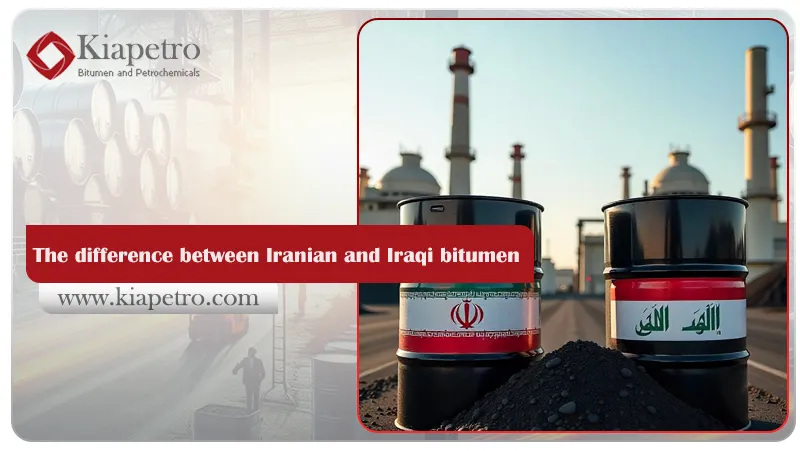
The difference between Iranian and Iraqi bitumen is an important consideration for contractors, traders, and procurement teams involved in regional and international projects. While both origins supply bitumen for road construction and industrial applications, differences in production base, quality consistency, logistics, and export structure can influence sourcing decisions.
Understanding these differences helps buyers select the most suitable origin based on project requirements, delivery timelines, and performance expectations rather than price alone.

Bitumen Iran Vs Bitumen Iraq
In the landscape of global bitumen, both countries, Iran and Iraq, are vital and key suppliers. The difference between Iranian and Iraqi bitumen is not about the prices, since both countries’ prices are based on Persian Gulf fuel oil or PGFO.
However, the difference between Iranian and Iraqi bitumen is about the quality, production capacity, and infrastructure. KIAPETRO, as a trusted and supportive bitumen supplier in Iran, makes sure that all its products meet the global standards to meet the needs of its clients.
The quality
About the bitumen’s quality, Iranian bitumen is known for high adhesion durability and Performance under varied temperatures. While Iraqi bitumen shows lower performance in durability and stability because of differences in crude sourcing and production process, which makes this bitumen acceptable for many applications.
The difference between Iranian and Iraqi bitumen is that Iranian bitumen, produced especially at KIAPETRO, is based on international standards. However, the problem with Iraqi bitumen is the VR or vacuum residue, which is a byproduct of vacuum distillation of crude oil.
This vacuum distillation makes the bitumen have low flash and fire points, adequate durability, poor performance in high temperatures, and a lack of standardization.
Key Pricing Influencers
About the key pricing influencers, the price of crude oil affects the Iranian and Iraqi bitumen equally. However, the difference between Iranian and Iraqi bitumen, quality differential, support, and demand have their effects on their bitumen.
Because of the quality differential, Iraqi bitumen is mostly $10 to $20 per metric ton lower than Iranian bitumen so making it more in demand.
Market Trends
The difference between Iranian and Iraqi bitumen is not just about the pricing. It is also about the quality, and since the Iranian reliability, supply, and quality advantage continue to boost the demand, its global infrastructure investment grows constantly.
The chart below is about the differences between Iranian and Iraqi bitumen.
| Feature | Iran Bitumen | Iraq Bitumen |
| Quality | Standard-compliant | Variable, often lower |
| Viscosity | Normal flow properties | High viscosity (hard to apply) |
| Sulfur Content | Low, minimal odor | High sulfur, strong smell |
| SPOT Test | Negative (stable composition) | Positive (can lead to coking) |
| Application | Widely used, proven performance | Limited use due to quality issues |
Bitumen manufacturers in Iran
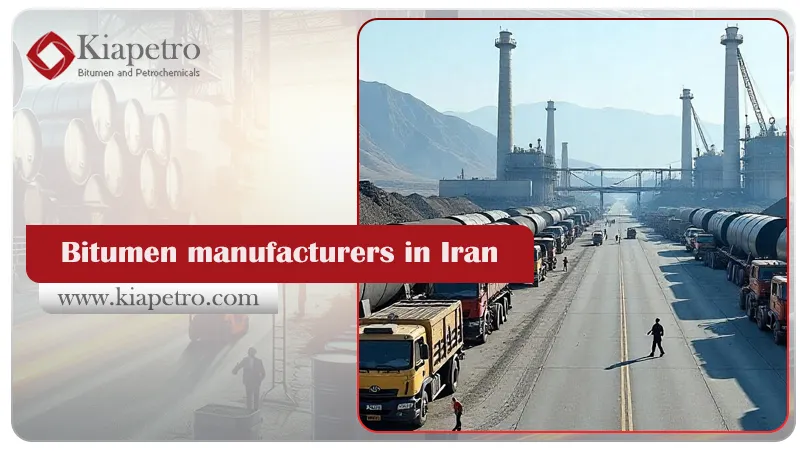
Iran is one of the largest producers and supporters of bitumen, which is home to several key players known for their strong production capacity, export capability, and commitment to quality. The difference between Iranian and Iraqi bitumen can be their supplier companies.
KIAPETRO, a distinguished bitumen company in Iran, specializes in premium emulsion, VG grades, and MC products. This company focuses on flexibility and competitive pricing, and customer-centric service, making it a reliable partner for clients.
-

Penetration grade bitumen 60/70
Read more Order Via WhatsApp -
Penetration Grade Bitumen 80/100
Read more Order Via WhatsApp -
Viscosity bitumen grade 30
Read more Order Via WhatsApp -
Viscosity bitumen grade 40
Read more Order Via WhatsApp


KIAPETRO produces a full range of bitumen grades, including:
- 60/70, 80/100, VG30, VG40 and other types.
- Packed in steel drums, jumbo bags, or shipped in bulk vessels.
Why Customers Prefer Iranian Over Iraqi Bitumen?
Iran’s bitumen price is not the only reason for its superiority.
- Superior Quality: Meets all ASTM standards.
- High Durability: Strong binding properties for better performance.
- Custom Specs: Tailored to meet construction and waterproofing needs.
- Competitive Prices: Iranian bitumen is among the cheapest globally.
- Proven Track Record: Trusted in global infrastructure projects.
- Modern Technology: Uses equipment from Germany and Austria (e.g., Porner).
- Global Availability: Easily found in hubs like Dubai, Qingdao, Mundra, Mombasa, Djibouti, and Dar es Salaam.
Bitumen manufacturers in Iraq
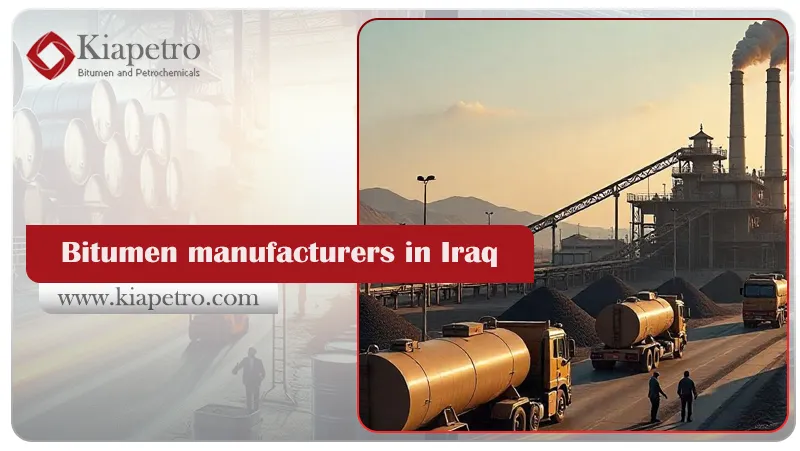
The production of bitumen in Iraq is mainly from wells in Kurdistan and the south. In Iraq, traditional refinery methods are used to produce bitumen. So, because of that, the quality varies, especially due to sulfur content.
The Iraq’s bitumen price is based PGFO pricing model, and because of this, its price is lower due to slightly inferior quality and less advanced refinery capacity.
Iraqi bitumen in a nutshell
- Grades 60/70 and 40/50 suit hot climates, but poor refining leaves sulfur that harms road quality.
- Solubility is under 99.8%, with relative permeability at 1–1.5.
- Iraq’s bitumen price is affected by cheap Russian oil, unstable policies, Iraqi low-grade imports, exchange rate shifts, and packaging type.
- Iraq re-exports bitumen via Iran under Iranian labels, damaging Iran’s brand and export value, especially due to high transit costs.
Purchase from KIAPETRO
Unlike low-quality Iraqi bitumen, Iranian bitumen, especially from the KIAPETRO company, offers superior durability, purity, and performance. While KIAPETRO’s rivals in Iraq often lack proper refining, Iran’s brand, KIAPETRO, ensures high standards, reliable sourcing, and consistent quality for all domestic and export needs.
Summary
The difference between Iranian and Iraqi bitumen isn’t just about price. Though both Iran and Iraq use the PGFO index as a pricing base, Iranian bitumen commands higher prices due to its superior quality and production reliability.
Understanding the interplay of quality, supply dynamics, and crude oil trends is essential for navigating procurement in this competitive market.
FAQ
- How does Iraqi bitumen affect Iran’s export market?
Some traders rebrand Iraqi bitumen as Iranian, damaging Iran’s reputation for quality and creating unfair price competition in global markets.
- What are the risks of using Iraqi bitumen?
Risk of premature road failure, lack of international compliance, brand misrepresentation, and issues with long-term performance.
- Why choose Iranian bitumen?
It’s reliable, tested, compliant with global standards, and preferred by professional contractors and government projects worldwide.




No comment